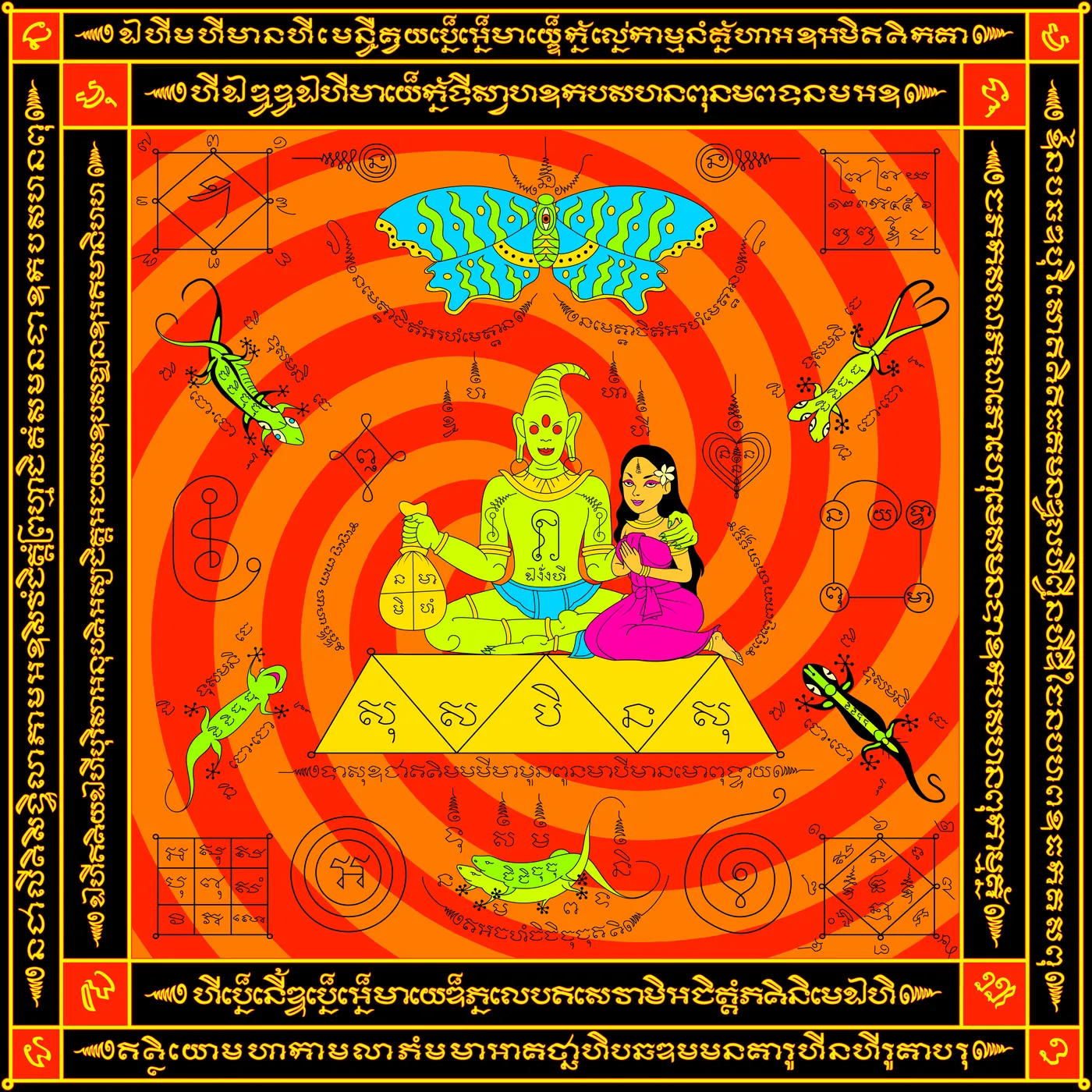
The Phra Ngang Codex
The Holy Fool of Thai Sorcery
It’s called saiyasart (the “midnight science”) — an ancient form of Khmer magic that works with ghosts, angels, and nature spirits for luck in gambling, fighting, and seduction. The most dangerous and controversial spirit of all is Phra Ngang: the red-eyed “holy fool.”
The Phra Ngang Codex is 1,999 one-of-one, hand-drawn, blacklight ritual flags composed from traditional sacred glyphs and magical tattoo designs, as an act of merit in his name. A percentage of every sale supports a Bangkok foundation that protects street children.
The Spirit
Phra Ngang (พระงั่ง) is a controversial folk saint from the animist traditions of Thailand and Cambodia. He belongs to fighters, gamblers, sex workers, smugglers — anyone operating outside conventional safety.
An ajarn (Thai folk magician) friend of mine described Phra Ngang perfectly: he’s like your snake uncle who just got out of jail. You know you’re going to have to hide the silverware, but you also know you’re going to have one hell of a good time.
This collection is dedicated to him.
The Artifact
 DaylightBlacklight
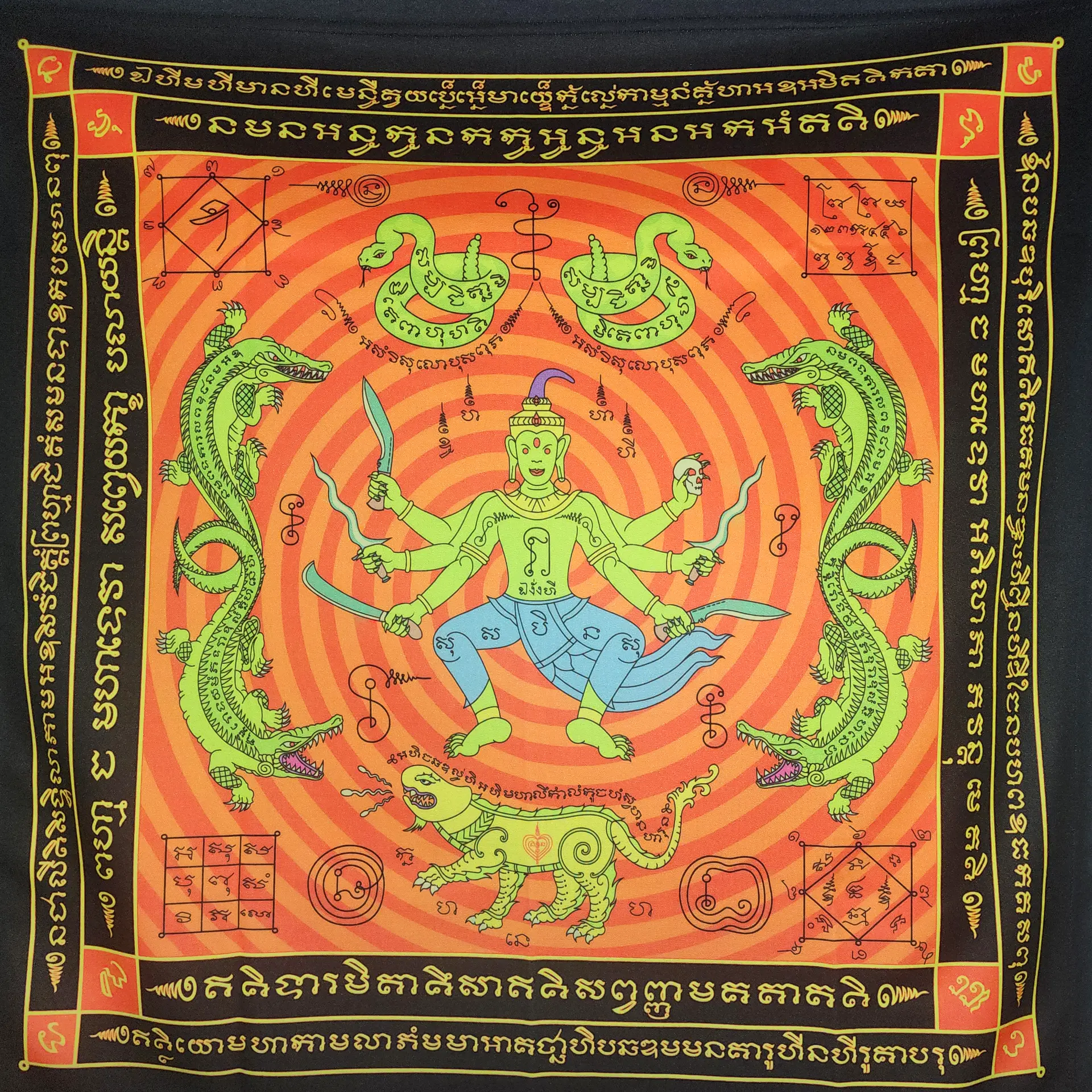
Designed for UV-reactive ink. In daylight it reads as psychedelic sacred art. Under blacklight, the entire room changes and the floor shifts beneath your feet — almost like you've just opened a portal to another dimension.
Every figure, symbol and line of sacred calligraphy in the series was hand-drawn in collaboration with a Bangkok tattoo artist and a working Thai magician. Those authentic, human elements form the pool each flag is generated from, with no two flags alike.
You get the flag itself — a 30 × 30 inch UV-reactive pha yant ("magic cloth"), printed on demand and shipped to you — plus an in-depth written interpretation of its configuration and a certificate of authenticity keyed to the code printed on the cloth.
What Makes It Rare
In the folk-Buddhist traditions of Southeast Asia, a pha yant is a “magic cloth” — a deity at its center, surrounded by sacred calligraphy and sigils. Traditionally it comes in two forms: a temple screen-prints an edition of thousands of identical copies, or an ajarn (a village sorcerer) hand-paints a single one-off.
This is, as far as I know, the first time a pha yant series has ever been algorithmically generated, filling the gap between the temple’s screen-printing and the ajarn’s one-off. In this tradition a pha yant is a portal, not a decoration, so the variations serve a real purpose — 1,999 expressions of sacred energy, each with their own completely unique combination of symbols, animals and poses for luck, love and protection.
It’s also the first full-colour series devoted to Phra Ngang that I’ve come across. He’s a folk saint of the underclass the temple economy passes over, so he rarely gets a pha yant at all — the few that exist are hand-drawn one-offs on materials that carry his charge: a square of brothel sheet, a piece of funeral shroud.
And I’ve never seen another pha yant made for blacklight. Phra Ngang is a nocturnal spirit, so a flag that sleeps in daylight and wakes under UV is the right body for him — each one a small doorway, a way, in the tradition’s own terms, to widen his foothold here.
Merit
This originally started as an NFT project, and it fit the moment: speculative gold rushes running on appetite, hype, and the hunger to win are Phra Ngang’s terrain. Then the NFT bubble popped, so I kept the parts worth keeping — the generative art and the merit-making.
In Thai tradition, you don’t ask spirits like this for favors without giving something back. So a share of every sale goes to a Bangkok foundation that protects street children — a sincere thank-you to Phra Ngang, and a counterweight that keeps my own work with him from tipping into delusion.
That foundation is the Childline Thailand Foundation — food, shelter, counselling, and protection for children living on the streets of Bangkok, with donations tracked publicly through GlobalGiving.